
Solar panels are a great investment that can boost the value of your home and save you a lot of money in the long run. However, inclement weather can potentially damage your panels. That’s where insurance comes into play. In this article, we’ll explain all you need to know about getting your solar panels insured and why you should consider doing it.
Does Homeowner’s Insurance Cover Solar Panel Installations?
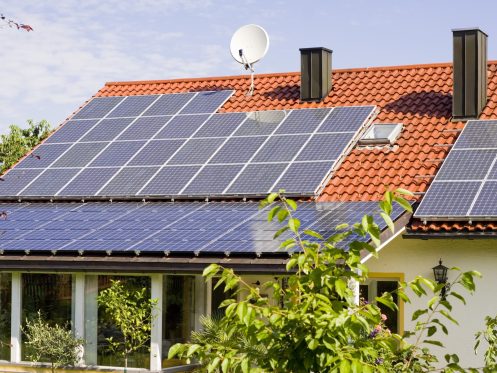
One of the first things you should do when looking into solar panel installation is check with your homeowner’s insurance provider to see if your policy covers solar panels. You should also ask if there are any stipulations as to what they will and won’t cover. Most homeowner’s insurance policies will cover roof-mounted solar panels under the dwelling coverage, meaning they are protected just like your home.
However, some insurance companies have exceptions for solar panels where they won’t cover any damage that results from hail or strong winds. This is especially common in places that are more prone to major thunderstorms and extreme weather, where a standard policy often doesn’t cover hail or wind damage to the home either.
If your current policy excludes hail or wind damage, you may want to see if you can find additional coverage, as hail and wind are two of the things that are most likely to damage solar panels. In high-risk areas, insurers may offer additional endorsements or policies that specifically cover these types of damage. Lightning is the other biggest culprit in terms of solar panel damage, but luckily almost all policies cover lightning damage.
In terms of solar panels that are mounted directly on the ground or installed on a building other than your home, such as a shed or detached garage, there is a lot more variance between different insurance providers and different policies. Many policies will cover solar panels installed on a detached building as part of the “other structures” coverage. Some policies may consider ground-mounted solar panels to fall under that category, but this is less common. For ground-mounted solar panels, separate coverage or an endorsement may be needed, depending on the insurer.
The fact that different insurance companies have different policy terms in regard to where the solar panels are installed is something to consider when choosing where to install the panels on your property. If you have sufficient space and your policy covers ground-mounted solar panels, this may be the better option.
That’s partly because ground-mounted panels are easier to maintain and also because you have to deal with the hassle and expense of removing roof-mounted panels when your roof needs to be repaired or replaced. If your policy only covers panels mounted onto your home or another structure, you then need to decide whether it’s worth installing ground-mounted panels and paying for an additional policy that will cover them.
It’s also important to check whether the policy covers related systems, like net metering or battery storage, which are sometimes used alongside solar panel installations.
Will Solar Panels Increase Your Homeowner’s Insurance Premiums?
In terms of whether your premiums will go up when you install solar panels, it really depends on your specific policy and the size/cost of your solar installation. Some companies won’t raise your rates unless you’re installing a much larger, more expensive solar power system. Other companies will almost certainly increase your premiums due to the high cost of them potentially having to replace any damaged panels and the fairly high risk of them getting damaged by lightning, wind, and hail due to their elevated position on your roof.
In the case of a large solar panel installation, one thing you may need to do is increase your total coverage amount to ensure that your policy will fully cover the costs of replacing the panels if they get damaged. It’s crucial to evaluate whether your current dwelling coverage is sufficient to cover the added value of the solar panels. In this case, you can be fairly certain that your premiums will go up. Nonetheless, paying a slightly higher premium is still going to be worth it in most cases just to ensure that your solar panels are covered and you don’t have to pay out of pocket to replace them should they get damaged.
Additionally, most solar panel installations come with long-term warranties, typically around 25 years, that cover product performance and certain maintenance needs. Be sure to check the specifics of the warranty and how it works with your insurance.
If you’re looking to install solar panels on your Texas home, GVEC Solar & Battery Services is the company to turn to. We service customers in New Braunfels, La Vernia, Cuero, Seguin, Schertz, Gonzales, and all of the surrounding areas in Texas. We have years of experience in the full range of solar services. When you choose us for your solar installation, you’ll also receive a full 25-year warranty on your panels that helps protect you should unforeseen issues arise that cause your panels to fail prematurely.
For more information or to schedule a consultation and learn if a solar installation is right for your home, contact GVEC Solar & Battery Services today.