

With each passing year, the effects of climate change become more apparent. Persistent drought conditions, unstable weather patterns, and strengthening storms keep increasing. To combat climate change, it’s incumbent on all of us to do what we can to cut our carbon footprint.
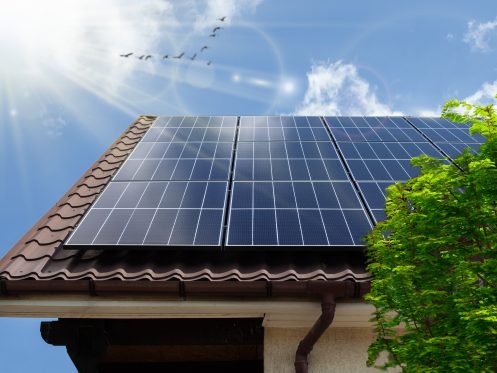
Solar power offers an excellent way to do that for homeowners in the Guadalupe Valley. It’s a solution that has far-reaching implications for our shared environment. To elaborate, here is a look at the environmental impact of solar panel installation and solar adoption in general.
Electricity Generation and Climate Change
According to scientific consensus, the release of carbon dioxide and other greenhouse gases drives climate change. By far, the vast majority of those emissions come from human activity. A staggering amount comes from various electrical generation methods.
In the US, electrical generation accounts for roughly 30% of all yearly carbon emissions. Most of that comes from the operation of coal and gas-fired power plants. Those two sources account for about 59.2% of all electricity generated yearly here in Texas.
That reality means there’s no way to combat climate change without finding replacements for carbon-intensive electrical generation. The good news is that wind power already makes up about 25% of Texas’s electricity supply. Nuclear power adds another 9.7%. What you may not know is that solar power already accounts for at least 6% of our state’s electricity supply. It’s also the only type of green electrical generation currently accessible directly to homeowners.
The Carbon Footprint of Solar Power
If you’re like most people, you may believe that solar power has no carbon footprint. After all, solar panels harvest the already-existing energy beamed to our planet via solar radiation. However, there are still carbon emissions connected to the lifecycle of solar power panels and equipment. Any type of production, even if you’re producing a product that harvests renewable energy, is going to require resources and come with some environmental cost associated with manufacturing, shipping, and other details. Fortunately, the footprint for solar panels is much smaller than most other electrical generation methods.
The average solar panel has a lifetime carbon footprint of about 41 grams of CO2 per kWh of electricity produced. That compares favorably to gas-fired generation, at 490 grams per kWh, and coal, at 820 grams per kWh. Replacing those generation sources with solar power would dramatically slash Texas’s overall carbon footprint.
Solar Power and Full Electrification
Solar power can also slash some carbon emissions outside those associated with electrical generation. That’s because installing a solar power system can allow homeowners to fully electrify their homes. For example, solar power can make switching to a heat pump from a gas furnace economically viable.
That alone can trim household carbon emissions between 45% and 72%, depending on usage patterns. It can also make it possible to eliminate other gas-powered appliances like ovens and clothes dryers. Those don’t contribute much to the average household’s emissions, but every reduction helps.
Perhaps most importantly, solar power can help homeowners switch to an EV while keeping charging costs low. According to the Environmental Protection Agency, the average gas-fueled vehicle emits roughly 4.6 metric tons of CO2 yearly. By switching to an EV paired with solar power, it’s possible to eliminate those emissions and save money simultaneously.
It’s also worth noting that homeowners can amplify the environmental benefits of their solar systems with battery storage. The key is the installation of an oversized solar power system. If a home’s solar system generates more electricity than it needs, battery storage ensures it won’t go to waste. The battery can store reserve power to ensure plentiful electricity on overcast days. Or, it can allow for surplus energy sales back to the grid at advantageous times. That extra supply means less overall reliance on carbon-intensive generation sources.
Electric appliances like clothes dryers and HVAC systems use a massive amount of energy. By switching to a renewable solar-based energy source for these power-hungry machines, you can make a huge difference in the amount that you’re consuming as well as your household carbon emissions.
Local Solar Power Specialists
Since 2013, GVEC Solar & Battery Services has offered quality solar power services to homeowners in the Guadalupe Valley. In fact, we’re a statewide leader in residential solar power. By 2018, we’d installed almost 1,200 solar panels on local homes.
That’s the largest residential solar power generation concentration in all of Texas. We also offer multiple ways for homeowners to afford the solar power systems they want. We offer financing options on approved credit and convenient on-bill payment options. So, if you’re interested in a new solar power system for your Guadalupe Valley home, contact GVEC Solar & Battery Services today!