

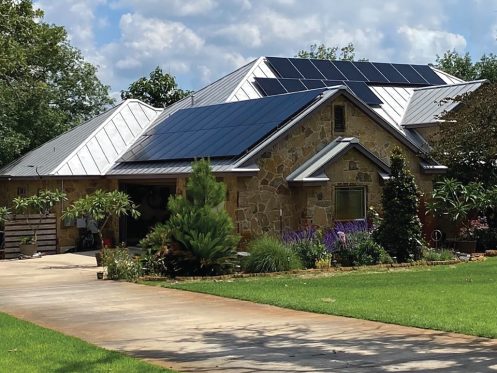
Solar panels work best when they receive steady, direct sunlight. That sounds simple, but shade is not always easy to judge by looking at the roof once or twice. A roof that looks sunny in July may get longer shadows in December from trees, chimneys, rooflines, or nearby buildings.
For homeowners in the South Central Texas area, that matters. Seasonal sun angles, tree growth, and roof design can all affect how much energy a solar system produces over time. During a free solar consultation, GVEC Solar & Battery Services can help you understand how shade may affect your home’s year-round solar production before a system is designed or installed.
Shade Changes From Season to Season
Shade does not fall the same way every month. In summer, the sun sits higher in the sky, so shadows are often shorter. In winter, the sun sits lower, which means the same tree, chimney, or neighboring structure can cast a longer shadow across the roof.
The timing of shade matters, too. A small shadow early in the morning may not affect production the same way as shade during the strongest sunlight hours of the day. A shadow that crosses one corner of the roof for a few minutes is also different from a tree canopy covering several panels through the afternoon.
Good solar planning looks at where shade falls, how long it lasts, and which roof areas receive the most consistent sunlight throughout the year.
How Trees Can Affect Solar Panel Output
Trees can make a yard more comfortable, especially during hot Texas summers. However, they can also reduce solar production if branches shade the roof during key sunlight hours.
The impact depends on the tree’s height, distance from the home, canopy shape, and growth pattern. A small tree may not be a major issue today, but it could create more shade as it grows. Mature trees near the sun-facing side of the roof may have a larger effect.
Leaf patterns also matter. Deciduous trees may block more sunlight when they are full of leaves and allow more sun through after the leaves drop. Evergreen trees can create steadier shade because they keep their foliage year-round. A solar design should consider both current shade and future growth.
Why Partial Shade Matters
Partial shade can have a bigger impact than homeowners expect. With some solar system designs, shade on one panel can affect output from a larger group of connected panels. Modern equipment, such as microinverters or power optimizers, can help limit that impact, but shaded panels still produce less than panels in clear sunlight.
Small shadows can matter if they hit the roof during strong production hours. A vent pipe may cast a narrow shadow that moves quickly, while a dormer or tree may shade a larger section for much longer.
This is why panel placement is so important. In some cases, a smaller number of panels placed in cleaner sunlight can perform better than more panels spread across shaded roof areas.
Rooflines, Chimneys, and Nearby Structures Can Also Create Shade
Trees are not the only source of shade. Chimneys, vents, skylights, dormers, second-story walls, fences, detached garages, and neighboring homes can all change how sunlight reaches your roof.
A roof section may seem like the obvious choice because it faces the right direction or has the most open space. However, nearby structures can change the production picture. Another roof plane with a slightly different orientation may be a better option if it receives more consistent sunlight.
A smart solar design looks at the whole property, not just the largest empty section of roof.
Why a Shade Assessment Matters Before Solar Installation
A shade assessment helps identify which parts of your roof receive the strongest sunlight and which areas may lose production during certain seasons or times of day. This matters because solar performance depends on real sun exposure, not just available roof space.
You may find that trimming branches could improve output, that one roof section performs better than expected, or that it is best to avoid certain shaded areas. The goal is to design around the sunlight your home actually receives instead of placing solar panels where shade may limit their value.
Plan Solar Around Real Sunlight
Shade patterns can affect solar production every month of the year. Trees, rooflines, nearby structures, seasonal sun angles, and weather all play a role in how much sunlight reaches your panels.
A free estimate from GVEC Solar & Battery Services helps homeowners evaluate solar potential, compare production expectations, and delivers a custom design that will best fit their individual needs and expectations. If you are thinking about solar for your home in South Central Texas, schedule a solar consultation with GVEC Solar & Battery Services to get a clearer picture of how shade may affect your year-round production.