

It’s becoming increasingly clear that renewable energy will displace fossil fuel generation. This is because burning fossil fuels is contributing to climate change and accelerating global warming. Unfortunately, rising temperatures also fuel electricity demand, creating a vicious, damaging cycle.
The big problem is that most renewable energy types still have significant drawbacks. There’s perhaps no better example of this than the difficulties associated with solar power in extreme climates. For a variety of reasons, both physical and technical, solar power can struggle in extreme climate conditions.
Here’s an overview of those challenges and some of the ways that scientists and engineers plan to overcome them.
The Challenges of Using Solar Power in Extreme Climates
To the average person, the concept of solar power is a simple one to understand. However, if converting solar radiation into electricity were easy, we’d have started doing it centuries ago. In fact, we tried.
The first rooftop solar power array was first installed in 1883. However, its efficiency was far too low for any practical application. At the time, solar panels could only convert about 1% of the sun’s energy into electricity. It may surprise you to find out, then, that today’s solar panels only manage a 22% conversion rate.
It’s worth pointing out, however, that today’s solar cells only reach those efficiencies under certain conditions. In general, most solar panels only reach peak efficiency at relatively low temperatures and with full solar exposure. Once temperatures rise above about 25 degrees Celsius, their energy production drops significantly. That’s only 77 degrees Fahrenheit.
To understand how much, consider the following. The average solar panel today has an efficiency coefficient of between .3% and .5% per degree. That means it will lose that much efficiency for every degree above 77 degrees that the temperature climbs. As a result, on a 95-degree day, the average solar panel is as much as 5% less efficient. That would drop its efficiency to 17%. That may not sound like much, but you must remember it isn’t happening in a vacuum.
This is because the hottest days also see the highest energy demand. In other words, solar power doesn’t work as well when we need it most. And as global temperatures climb, that efficiency differential on cool and hot days will only increase. That is unless someone comes up with a solution.
Current Solutions to Solar’s Extreme Climate Problem
Although today’s solar panels are all subject to the limitations above, there are ways to increase their performance in extreme heat. They include the following:
Maximizing Airflow Around Panels
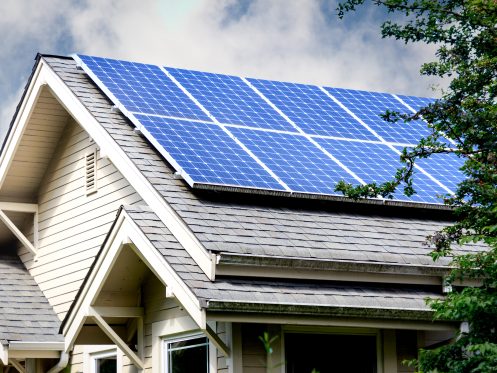
The most basic technique used to keep solar panels in the proper temperature range is using elevated installation racks. Whether in ground-based arrays or rooftop arrays, this ensures maximum airflow around the panels. This helps dissipate heat and minimize efficiency losses on hot days.
Solar Tracking Arrays
Another approach used to overcome poor extreme weather performance in solar panels is solar tracking arrays. This involves the installation of solar panels on special mounts that rotate to keep the panels exposed to maximum sunlight. While that won’t affect the efficiency losses created by the heat, it offsets them through longer production hours.
Here in the Guadalupe Valley, stationary solar panels receive an average of 4.92 hours of solar exposure per day. With a tracking array, that number can increase by up to two hours.
High Concentration Photovoltaics
Today, the majority of residential installations use solar panels with conventional photovoltaic cells. However, there’s another alternative, called high-concentration photovoltaics (CPV). They use special lenses to concentrate more solar radiation onto a more efficient solar cell. Panels using the technology can operate at up to 46% efficiency.
That’s high enough to remain practical even in extreme climates. Unfortunately, however, CPV panels can cost up to four times that of conventional solar panels. Plus, there aren’t many panels using CPV technology built for residential use just yet.
Waste Heat Collection and Repurposing
Finally, solar panel systems that employ a waste heat recovery system are now in use to keep them cool. Such panels typically use copper piping to carry heat from the panels for use elsewhere. For homes, this waste heat is especially useful for heating water for indoor use. Plus, this further trims electricity demand on hot days by eliminating or minimizing the need for a standard water heater.
Your Trusted Local Solar Power Experts
If you’re considering a solar power solution in the Guadalupe Valley, GVEC Solar & Battery Services can help. We’re the local leader in solar power technology, including solar panels, battery storage systems, and system design. We can evaluate your unique electrical needs and help you build and install a solar system to meet them.
Plus, we can help you maintain your system and even replace it with a new one when the time comes. So, contact GVEC Solar & Battery Services today for all of your solar power needs in the Guadalupe Valley.
Contact GVEC Solar & Battery Services today!